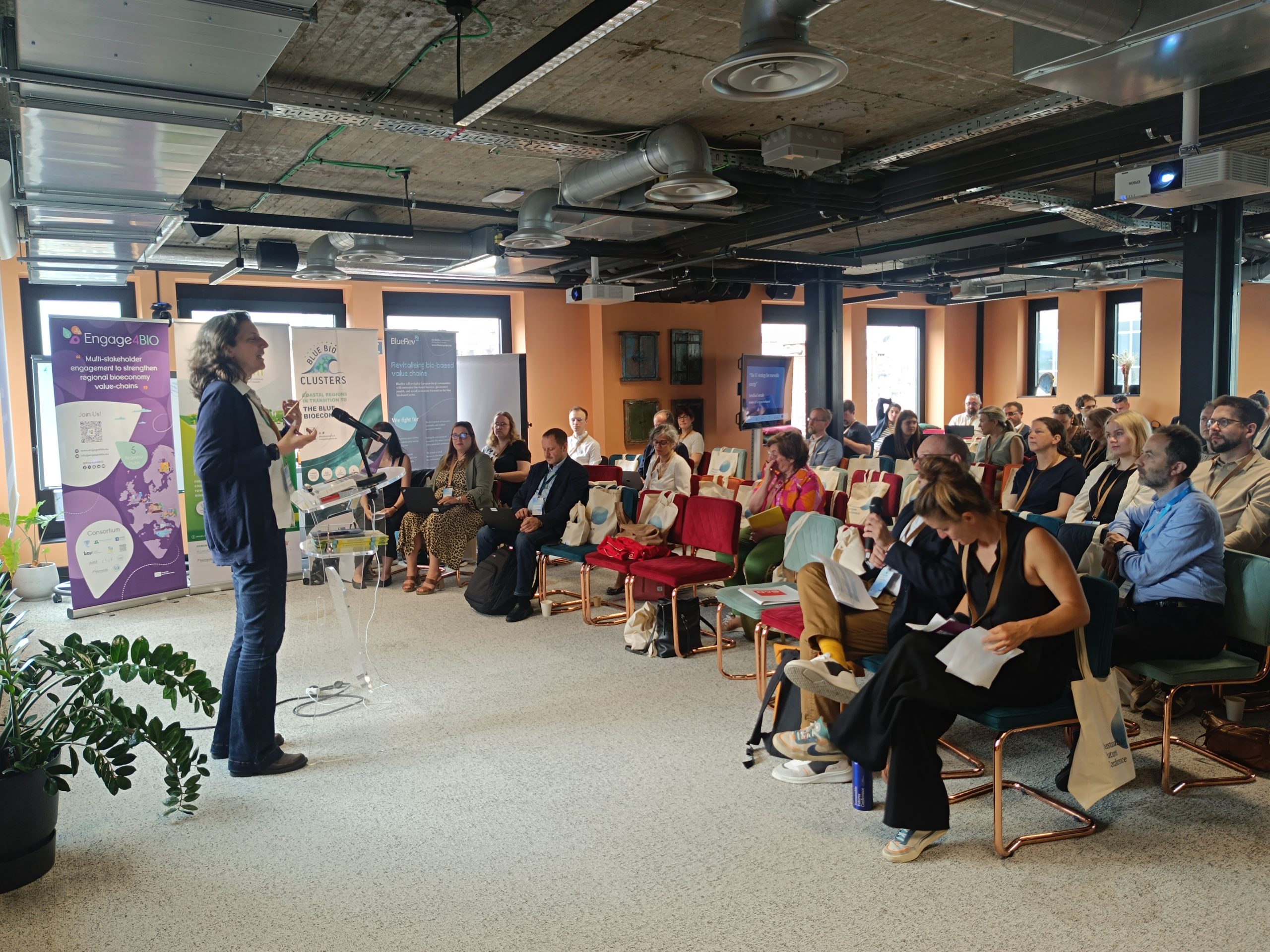
With the Sustainable Futures Conference now a month behind us, it’s time to revisit and reflect on the powerful dialogues, innovative ideas, and collaborative spirit that defined this landmark event held in Brussels. Co-organized by four Horizon Europe projects – SKILLBILL, Bluerev, Engage4Bio and BlueBioClusters – the conference united experts, policymakers, industry leaders, and local stakeholders around a shared vision: accelerating Europe’s just and sustainable green transition.
One of the core messages emphasized was the necessity of integrated, cross-sectoral collaboration. The conference illustrated how independent efforts within renewable energy, circular bio-based systems and governance frameworks are deeply interconnected. Strengthening regional and local communities emerged as pivotal for achieving climate neutrality and long-term socio-economic prosperity.
The projects collectively demonstrated that successful green transformation depends on empowering citizens and marginalized groups to co-create solutions tailored to their unique contexts — a bottom-up approach fostering inclusivity and innovation.
Drawing on the rich exchange of knowledge, seven main recommendations surfaced to guide future policy and programme design at both EU and national levels:
- Promote Synergistic Multi-Project Approaches: Encourage funding schemes that connect complementary bioeconomy and renewable energy projects to boost efficiency and foster cross-project learning.
- Enhance Stakeholder Engagement: Build inclusive, structured platforms for dialogue involving SMEs, local governments and civil society to co-create viable, sustainable business models.
- Address Skills Gaps Through Regional Training: Support tailored, collaborative education and vocational training paths developed jointly by academia, industry, and local actors – with particular emphasis on increasing women’s participation in renewable energy sectors.
- Ensure Long-Term Sustainability of Project Tools: Develop robust business models for maintaining digital tools post-project, including integrating them into EU repositories to ensure continued accessibility and scaling.
- Harmonize Educational Standards EU-wide: Streamline cross-border recognition of degrees and training certificates and promote AI-driven digital learning to increase accessibility.
- Leverage Art and Culture: Recognize art and cultural initiatives as impactful methods to raise sustainability awareness, foster inclusion, and inspire innovation.
- Support Local Governance Capacity-Building: Provide resources for empowering regional authorities to implement innovative governance aligned with EU strategies like the Green Deal and Circular Economy Action Plan.
The Sustainable Futures Conference was not only a platform for sharing outcomes but a catalyst for ongoing collaboration and action. By weaving together diverse perspectives and fostering synergies across sectors, it reinforced the vital role of projects like SKILLBILL in shaping a resilient, inclusive European bioeconomy and energy future.


